Not Taught, but Trusted
— What kind of system is the German "apprenticeship"?
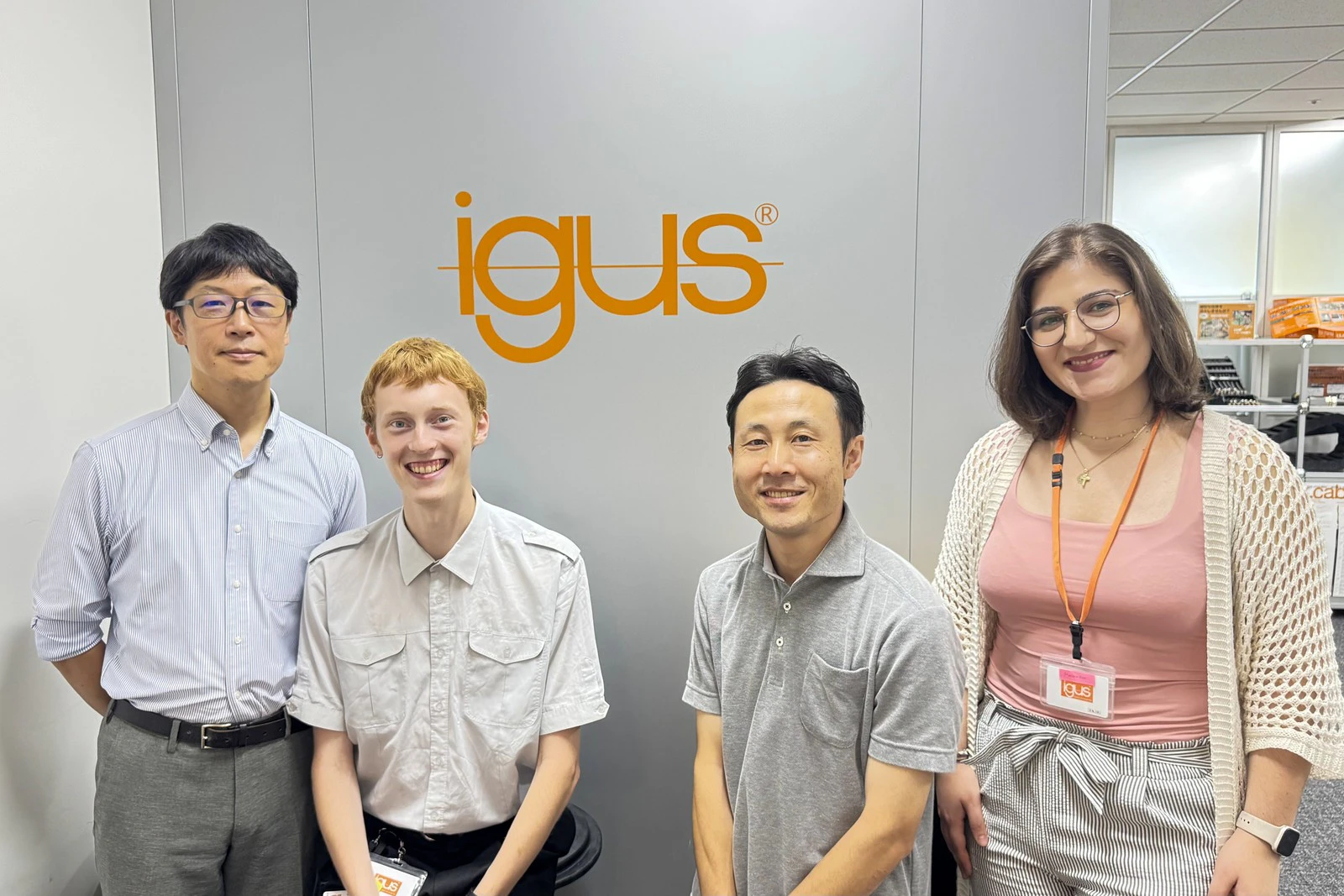
Damian: In Germany there is a system of vocational training called an apprenticeship, or "Ausbildung." It follows what's known as the "dual system" — you receive hands-on vocational training at a company while attending vocational school, working toward a nationally recognized qualification. Even for occupations that in Japan would typically require a university degree, such as banking or IT engineering, it's common for people to earn their qualifications this way. It usually takes three years, though it can be shortened to two for those with prior work experience. Host companies like igus pay a training allowance from the very first month, and completing the program can lead to a job offer from that company. Overseas training is a special program igus offers on top of this apprenticeship system, and it isn't open to everyone. We consulted with HR ourselves, told them where we wanted to go, and worked out together whether we could take part.
— So the training isn't so much about following a manual as building up experience through the work itself?
Urakawa: What we value most is giving people the chance to gain experience through their day-to-day work. Germany and Japan run essentially the same business and share the same corporate policy, but priorities and ways of judging things naturally differ depending on the market and the people involved. Even so, I think it's very igus-like to trust each person's ability and experience and let them take the initiative.
— How do the two of you, on the receiving end of this approach, feel about it?
Damian: I've heard from a friend at headquarters in Germany about his apprenticeship at a different company. There, the first year was spent almost entirely on classroom training — learning how the business worked and its internal rules one by one — before he was finally allowed onto the floor. igus was different. It felt more like being thrown straight into cold water: you learn the workplace and how things are done through practice. Rather than being taught first and experiencing later, you experience first and learn as you go, and I feel that way, more of it sticks. I've heard that at other companies, what you'll be doing on a given day is decided in advance, but at igus we're trusted to dive in ourselves and figure things out as we move. And once you're given a project, you're not cut off partway through just because some fixed period has ended — you're supported all the way through to completion. I think that, too, is very igus.
— So the chance to put things into practice comes before the classroom learning.
Damian: If I raise my hand, I'm brought straight into a project. I rarely feel treated differently because of my status as an apprentice. If anything, it feels more like being welcomed as part of a large family.
— "Like being part of a family" is a striking way to put it.
Maria: Every department has been willing to take us in, and we get to be involved in the work just like the regular employees. Nobody draws a line by saying "because you're an apprentice" — we can step outside our assigned duties and join a project simply by raising our hand. I'm told that at the final exam of the apprenticeship, we'll get the chance to teach employees what we've learned, flipping the roles of student and teacher. That experience of switching from being taught to teaching is something I don't think you can easily find elsewhere. Friends of mine back at headquarters in Germany often tell me they haven't felt this same sense of unity at other companies. I'd call it something unique to igus.
— What benefits do you see for the Japanese side in hosting apprentices like this?
Urakawa: With this apprenticeship program, I think one of the biggest benefits for managers is the chance to get real, hands-on experience managing someone from overseas. Managing a subordinate of a different nationality is never simple. But because, as I mentioned, our business and culture are largely shared across the group, and because there's already a base of work experience and a chance to communicate directly with the apprentices beforehand, it's easier to get things up and running. For people in other departments, too, having someone come from a department they regularly deal with means they can hear firsthand what's really going on with a given matter, or what kind of person someone is. In a multinational company, colleagues in other countries may be in regular contact, yet you often have no real sense of what they're thinking — these exchanges help build understanding and make communication easier. Normally, improving communication means organizing conferences or training sessions that bring people together from all over the world; compared to that, this kind of international exchange program takes far less time and cost. There's no need to set up a special project or assign a dedicated coordinator. To put it bluntly, for about the effort of hiring one part-time worker, we can improve communication between headquarters and the Japan office. Because the effort of preparing and running it is so small, it can continue frequently and over the long term, and the benefits gained end up being substantial.
A Long-Awaited First in Japan
— I understand the two of you each have your own story behind how you came to train at igus.
Maria: After finishing school, I began studying to become a teacher, majoring in Spanish and special-needs education for students with hearing and communication difficulties. But after a difficult event in my family, I had no choice but to give up my studies. Since my father had worked at igus's German headquarters for many years, I decided to start working there as a trainee instead. Looking back now, I feel it was the right decision, and this experience has brought me many valuable opportunities.
Damian: In my case, it started with my father's suggestion. He also works at igus, and I myself had done an internship at igus before and remember really enjoying it. That's part of why I chose igus again, without hesitation, for this training placement.
— Why did the two of you want to train in Japan specifically?
Maria: Europe and Asia were both options, but Europe is somewhere I can visit anytime. Asia — Japan especially — takes real time, planning, and expense to get to. That's exactly why this opportunity, which let me combine a work assignment with a trip to Japan, was so appealing to me.
Damian: I had long been interested in various aspects of Japan — its culture, food, language, and more. This training felt like the perfect chance to live in one of my favorite countries while learning more about Japan from a local perspective, so I applied.
— I also heard that the two of you are the first trainees to experience training in Japan.
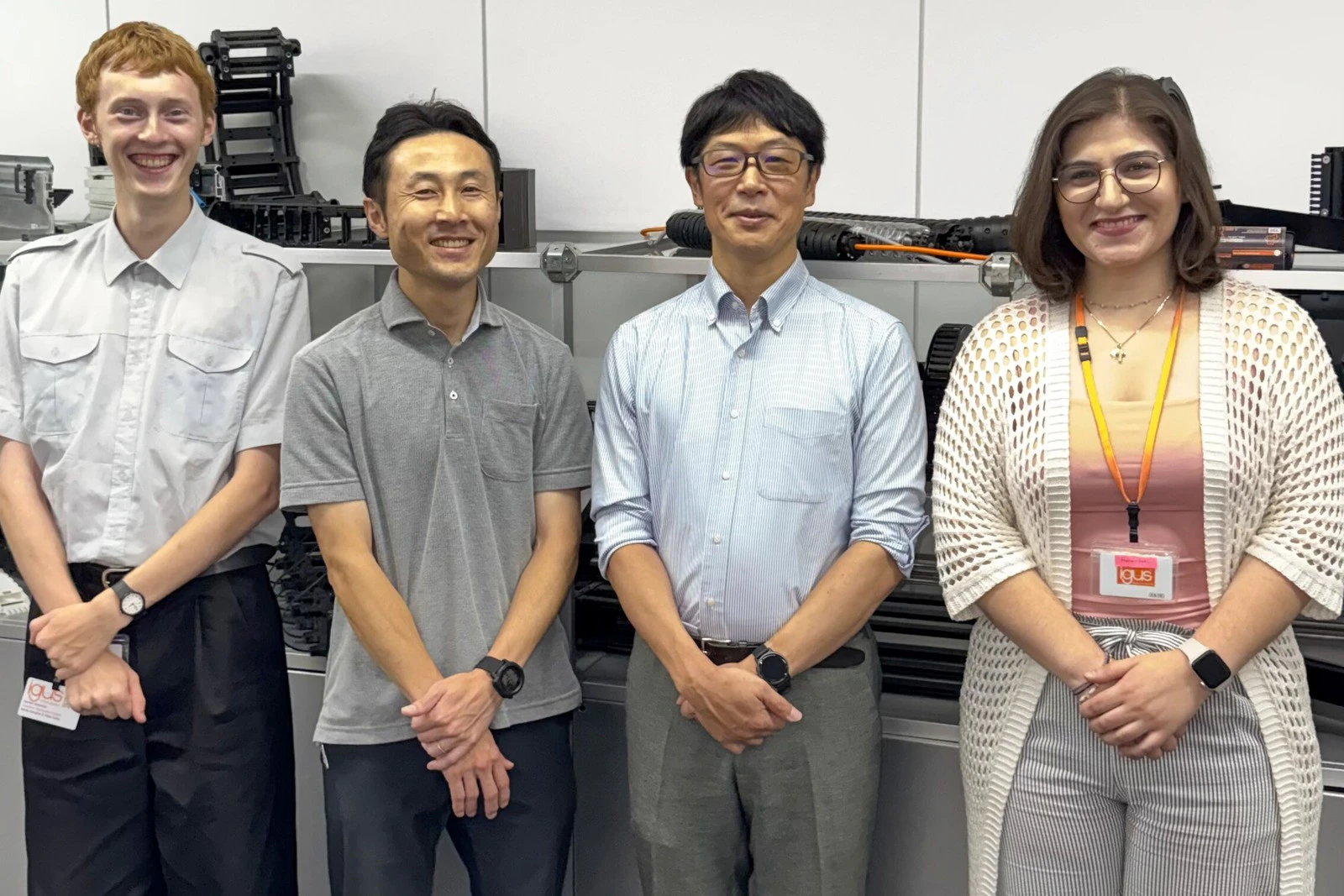
Kunita: That's right. There had apparently been trainees before who wanted to come to Japan, but the plans fell through because arrangements couldn't be made in time. This time, the two of you became the first trainees to work in Japan. We've had managers come to Japan or be posted here for improvement projects before, but hosting trainees was a first in that sense as well.
Damian: Actually, I'd heard that story beforehand too. I think the earlier candidates who wanted to come to Japan but couldn't make it happen were simply slow to get moving. I felt it was important to keep telling HR what I wanted starting about a year in advance, and I think that's exactly why we were able to make it happen this time.
Maria: I also kept telling HR, without giving up, how much I truly wanted to come here. I feel this program brought me somewhere I could never have reached on my own.
How an Organization Built on "-San" Creates Room to Adapt
— I heard that at your company, people are addressed with "-san" rather than by title or rank.
Kunita: Even the president is addressed with "-san," and I myself call Director Urakawa "Urakawa-san." Rather than by title, it's our culture to address one another by name.
— That sounds like quite a thorough version of a flat organization. Does an approval process for a superior — for expense approvals, say — still exist?
Urakawa: Of course, there are situations that call for a superior's judgment. The structure of ranks and approvals hasn't disappeared. What matters to us, though, is treating management not as something that "gives instructions" but as something that "supports each employee." Management sits at the outermost edge of the organization, supporting each employee's work from behind. I think that relationship comes through even in something as simple as how we address one another.
— I also heard that your company values the idea that "everyone is a manager."
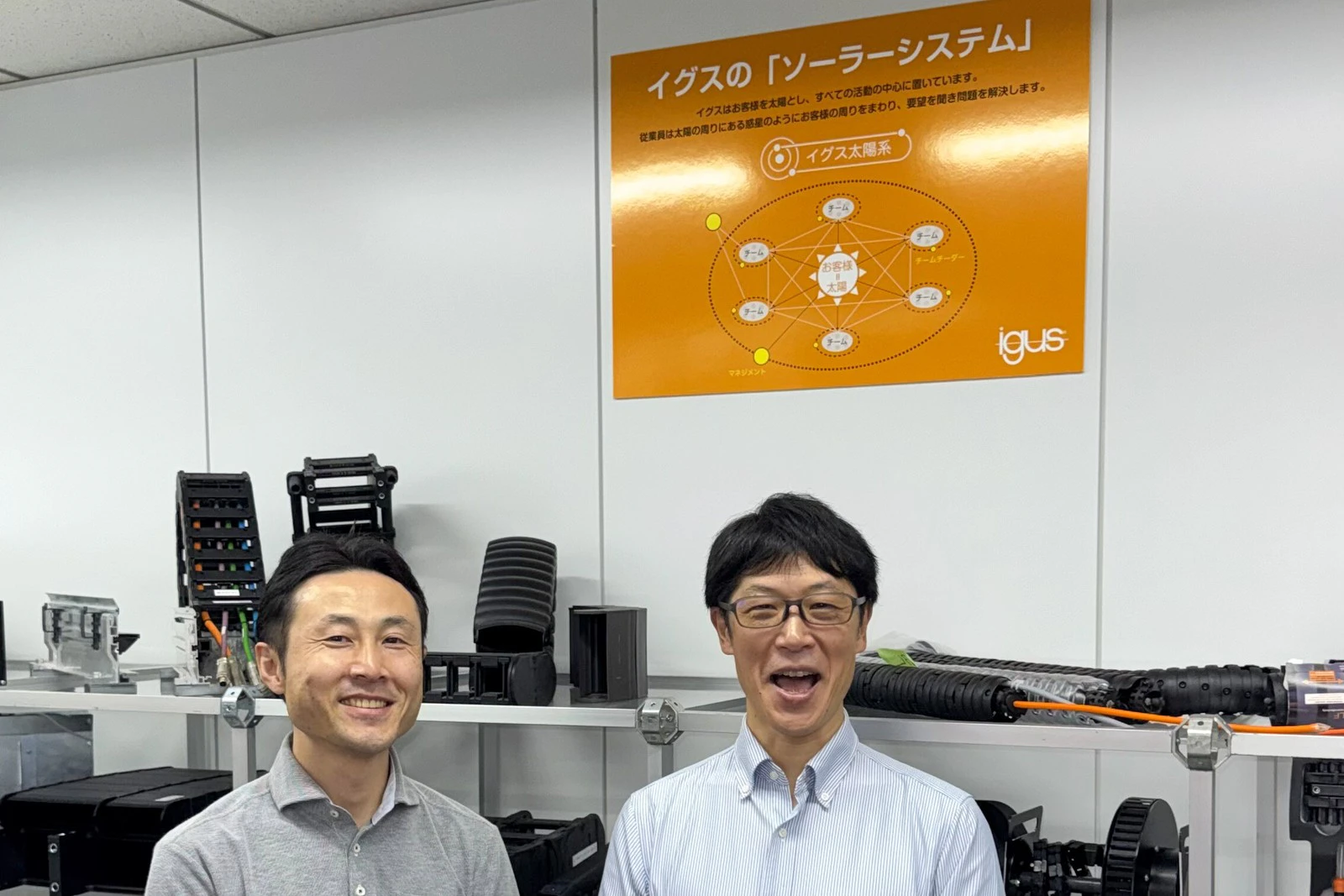
Urakawa: We have a concept we've carried since the 1990s called the "solar system." Just as the sun receives light and energy, we receive ideas and the fuel for our business from our customers. Management, in this picture, is like the satellites orbiting that sun — receiving the voices of employees, customers, and business partners, and passing them along. The idea is that following a superior's instructions matters less than thinking from the customer's point of view, and in that sense, every single employee is a manager. The culture at our German headquarters — addressing each other by first name and communicating freely in an office without walls — is an extension of the same idea. I think the "-san" culture here in Japan connects to the same idea at its root.
— Does this culture also affect how you host trainees from overseas?
Urakawa: I do think it has an effect. Because we have a culture that doesn't build walls out of rank or title, there's a foundation that lets any department comfortably take in a trainee, regardless of who they are. Rather than forcing the responsibility onto a specific department or person, whichever department finds it manageable at the time naturally puts its hand up. I think that atmosphere, too, is part of what makes us who we are.
— Do you have anything like a formal mentorship system in place?
Urakawa: We decide who serves as the point of contact by reaching out to whichever team or group can handle it at the time, rather than fixing a particular mentor — it's a flexible way of organizing things. Right now, the public relations department, which has relatively more English-speaking employees, is taking the lead as the main point of contact. The "igus Kids" program, an in-house scheme that lets employees' children experience an internship at an overseas site, and hosting trainees like this time, are both handled by public relations as well. It's less a system set by headquarters than something that has naturally taken root within the Japan office. I think it's also very igus-like that responsibility doesn't fall on one fixed person, and that the employees involved change each time.
— How did it come about that public relations took the lead in hosting trainees?
Kunita: There was a period when general affairs used to be the point of contact, but because public relations happened to have relatively more English-speaking staff, things naturally settled into their current shape. It's less that we designed it as a formal system and more that it gradually took root within the Japan office — that's the reality of it.
— So rather than assigning it as an obligation to a specific department, it settled in naturally.
Urakawa: If we fixed one department as the host every time, the burden would inevitably become lopsided. We've moved forward by reaching out to whichever team can handle it at the time. The fact that public relations tends to take the lead, as in this case, is simply because English communication happens to be easier there — going forward, it's entirely possible a different department will take the lead instead.
— Is this kind of hosting arrangement common across the German headquarters as well?
Kunita: How to decide on a host is left up to each country's local entity. In Japan's case, it's an arrangement that has taken root independently over the past several years.
The Japan They Saw, the Japan That Came to Know Them
— Was there anything difficult about hosting the two of them?
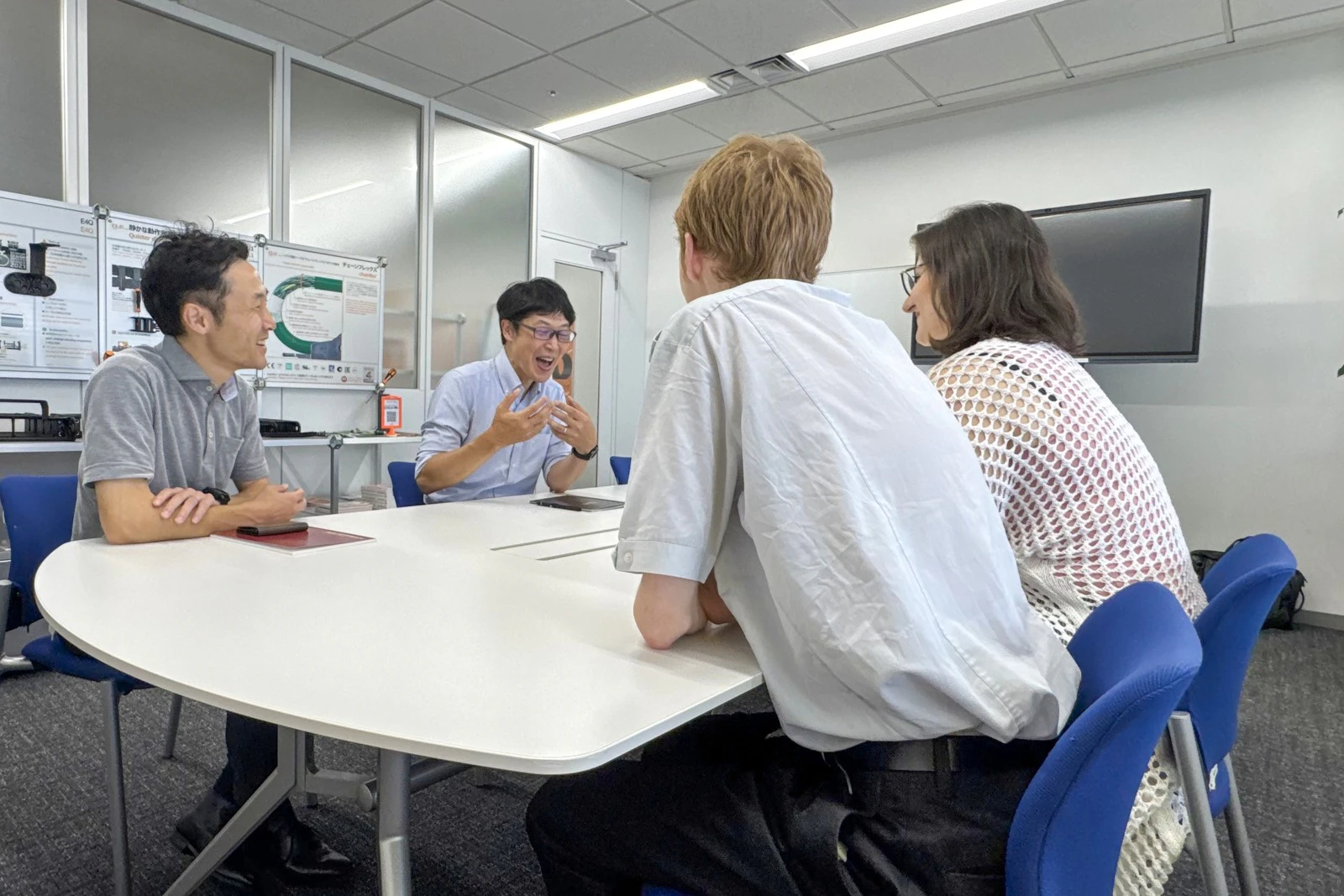
Kunita: Deciding what to have them work on was, honestly, a challenge. That said, compared with hosting a student with no work experience at all, it was actually less difficult than I expected. Maria already had experience working as a professional in Germany, making her the first case of hosting someone who, in a sense, was "already working." She had already completed basic training, and if needed, she could simply have continued working the German way here, so I didn't feel it was especially difficult.
— How do you interact day to day with Damian and Maria, whom you're hosting this time?
Kunita: Speaking in English with someone who isn't a native Japanese speaker can feel intimidating, but with Damian, who is 19, I find it easy to teach without feeling too much pressure. For example, he finds things that are too ordinary for us to notice — like the differences between convenience store chains, or the sheer variety of tea — genuinely fresh, which gives me new discoveries as the one teaching, too. The kind of easy, everyday exchange you get from "What did you eat yesterday?" "I had tempura" is a relationship that's hard to come by at a typical Japanese company. Going out for lunch together, almost like friends, is an entirely natural sight in our office.
— Was there anything the company supported as the two of you began life in Japan?
Kunita: We supported the basics of settling in — finding a place to live, getting daily necessities, and so on. Even something like a washing machine works differently in Japan than in Germany, so we make a point of explaining things in detail, right down to how to get around. Explaining these cultural differences one by one can be a lot of work, but it's also genuinely interesting. It becomes a chance to get to know each other, and it's been a valuable experience for me as well.
— So it's not just formal English conversation, but conversation rooted in everyday life.
Kunita: We can't just try out broken English on the spot in a business meeting with a client. But the time we spend with trainees in the office gives us a valuable chance to build up that kind of relaxed conversation. For our employees, it's also a place to actually put to use the language skills and connections with the world outside Japan that they've built up over the years.
— Did you notice anything while actually training them?
Urakawa: I've had to think a lot about how we communicate. Japanese people tend to assume that once you've explained the situation and the goal, the other person will work out the rest for themselves. But with people from overseas, if you don't put clearly into words what you'd like them to do, things don't move forward. I felt there may be a side to Japanese communication where it isn't always clear what's expected of you. It's been a good opportunity to think about how to communicate so that things are understood correctly, and why misunderstandings happen in the first place — and I think it's a perspective that's useful for managing across nationalities.
— What impression did you form from actually spending time in the Japan office?
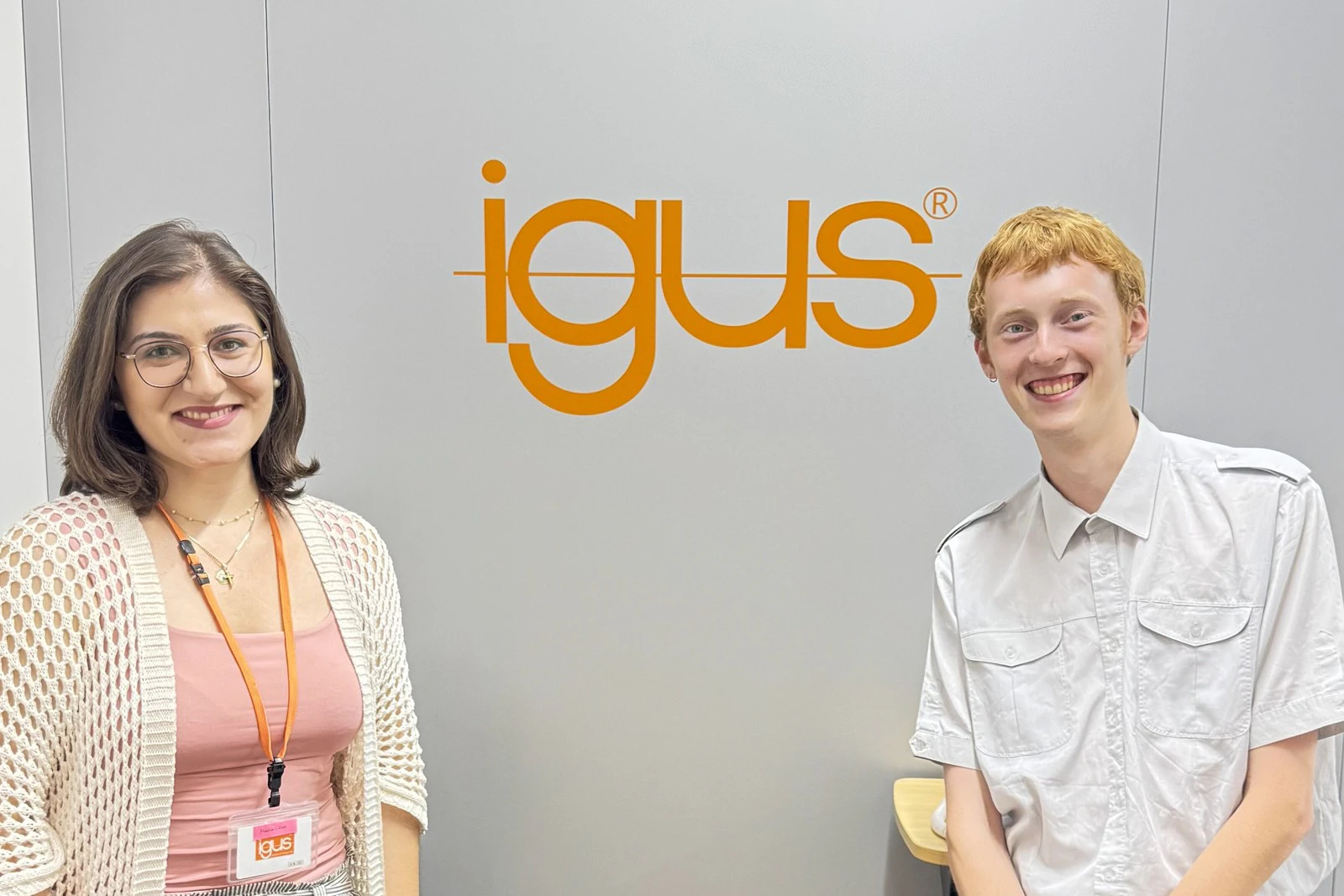
Maria: My impression of the Japan office has been extremely positive. From day one, everyone welcomed me warmly and made me feel part of the team. My colleagues are approachable and cooperative, and they're always happy to help whenever I have a question. I've also been impressed by the professionalism and organizational strength within the office, while at the same time it feels comfortable and full of mutual respect. What made me happiest wasn't just the support with work — it was the help I got in understanding Japanese culture and everyday life. I felt I already knew headquarters in Germany fairly well, but being able to see the same company, igus, from a different vantage point — Japan — has been a huge learning experience. I think it's precisely because it's the same business that I was able to notice the differences in how people work.
Damian: My colleagues have been genuinely kind and warm, and I've been able to share so many wonderful experiences. Touring the new factory in Sakura City, Tochigi Prefecture, was also memorable — the flow of work there was similar in some ways, yet completely different in others.
— Has there been anything you've picked up through your day-to-day work?
Maria: Before coming to Japan, I rarely had the chance to use Excel during training. But here, working under people like Urakawa on tasks that use Excel, I've been able to significantly improve my skills. I've really felt how much easier and more efficient many tasks can become, so I'd like to use it even more going forward.
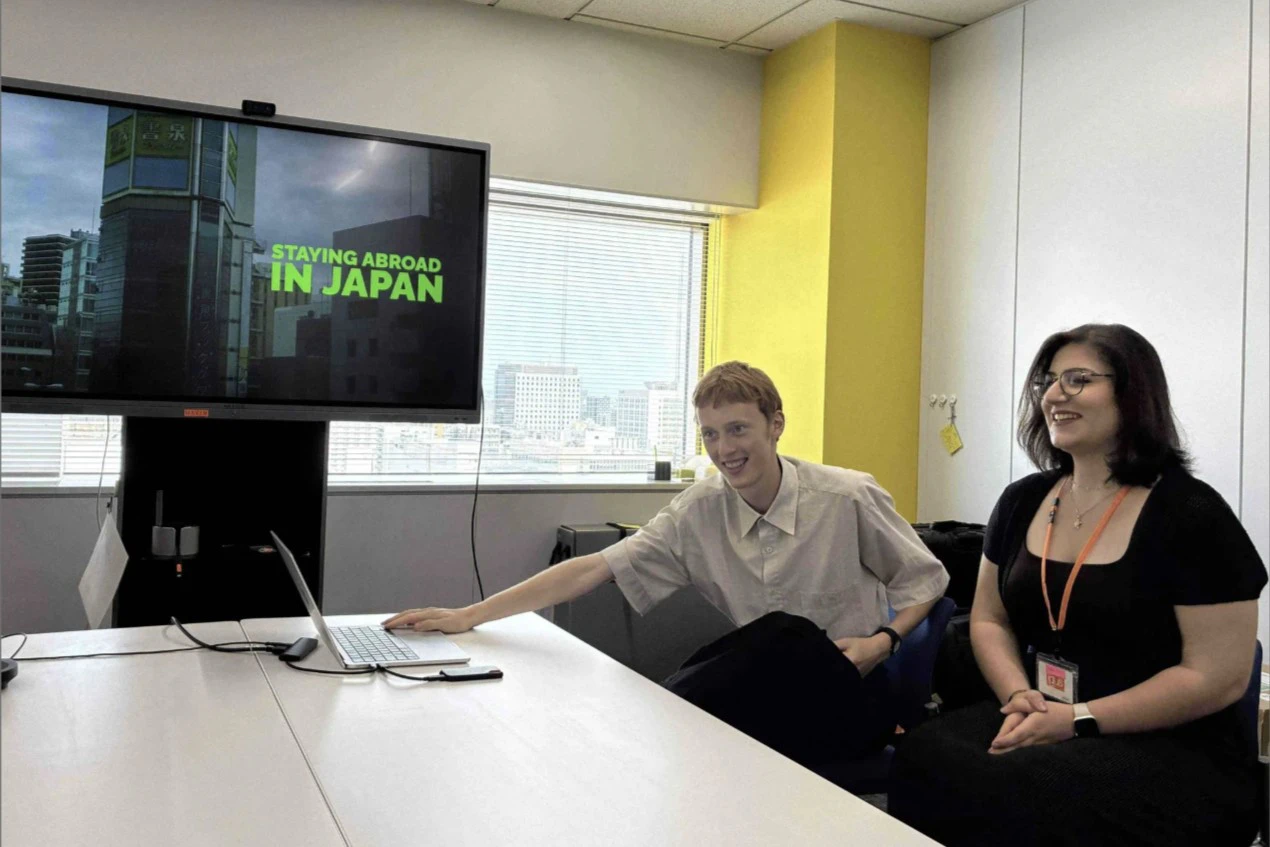
Damian: I've spent a lot of time with my colleagues on the public relations video team. Whenever something comes up, they call on me, and each time I pick up new production skills. I've also spent a lot of time exchanging ideas with the public relations team while working on video editing, and being exposed to perspectives different from my own has been a real source of inspiration. This opportunity, which came at a time I never expected, has come to mean a great deal to me.
Because It's a Business That Demands the Ability to Think
— Could you tell us again about your company's business?
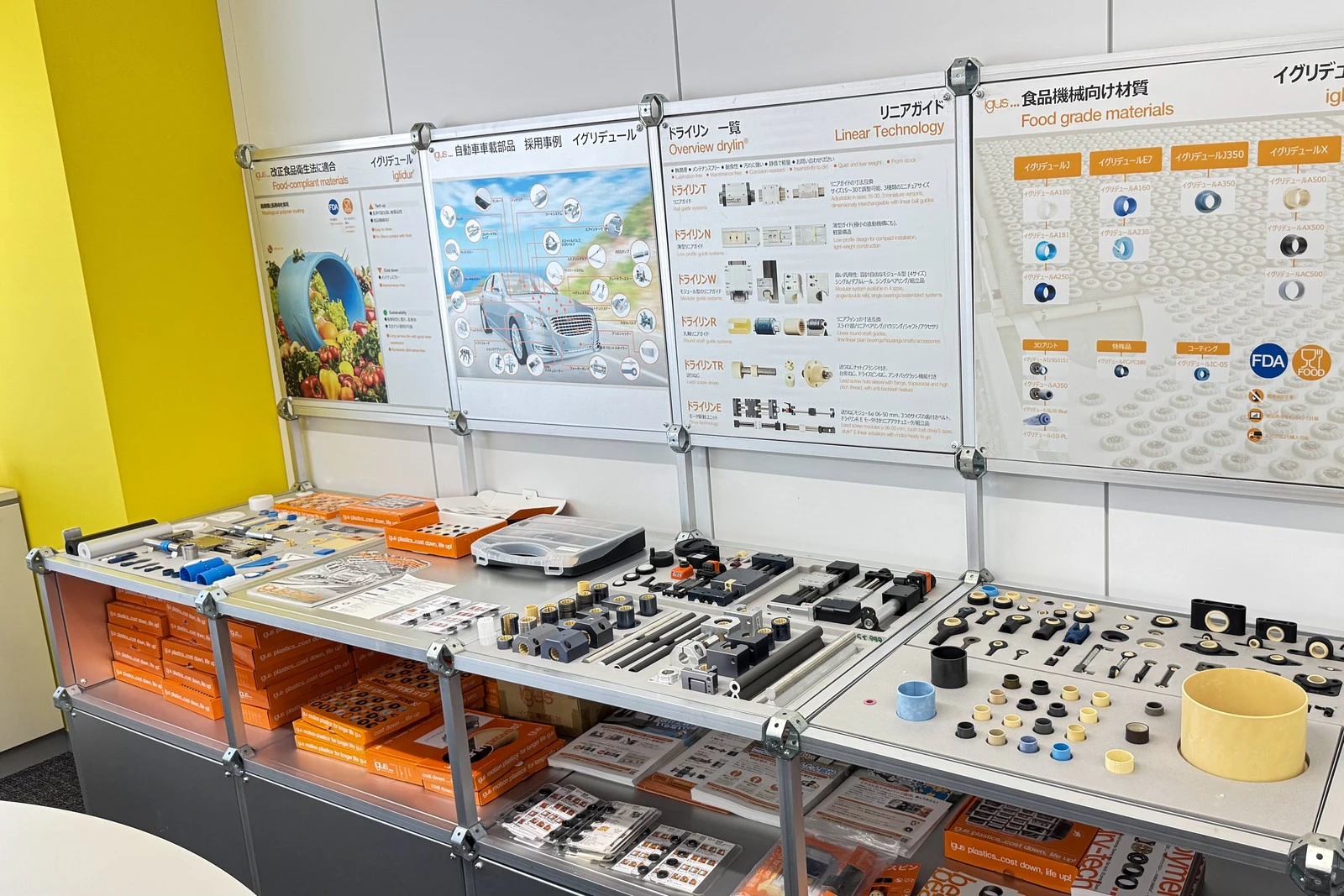
Urakawa: We are the Japan subsidiary of the igus Group, headquartered in Cologne, Germany. Since our founding in 1964, we have developed and manufactured resin products known as "motion plastics," which can be used without lubrication or oil. Our lineup includes e-chain, a resin cable carrier that protects cables while allowing them to move, and chainflex, cable designed for robotics. We also offer a wide range of other products that support the "moving parts" of machinery and equipment, including iglidur plain bearings made of resin and drylin linear guides.
— Are there any characteristics that come from being a globally operating company?
Urakawa: Our products are used in factories and facilities all over the world, and we work hand in hand with our German headquarters across development, manufacturing, and support. It isn't unusual for the person responsible for a product to come to Japan and join us in hearing what a customer needs directly. Hosting trainees like this time is also part of that kind of global organizational operation. It creates an environment where perspectives and experience that would be hard to gain domestically alone naturally find their way into the Japan office as well.
— Does the nature of your business also influence your approach to developing people?
Urakawa: Our lineup of lubrication-free, oil-free products sits in a field where applied thinking is essential — combining components to solve each customer's particular challenges. It calls for more than textbook knowledge; it demands the ability to think for yourself according to the situation at hand. I feel this overlaps closely with our approach to developing people — valuing learning through experience over simply teaching by rote.
A Challenge That Continues
— Do you hope to continue hosting trainees like this going forward?
Urakawa: Personally, I believe we should keep actively hosting trainees. I'm also genuinely curious how other companies approach similar initiatives. There's a great deal to be gained from this program — managers gaining hands-on experience managing subordinates from overseas, employees putting their language skills and cross-cultural contact to practical use. Learning how other countries develop their people can also be a source of inspiration when we find ourselves stuck for new ideas. I feel this is a meaningful initiative not just for the company, but for society as a whole. It's precisely because we can run it without straining ourselves that I want to keep this going.
— How do the two of you hope to grow with igus going forward?
Maria: I want to keep learning and taking on new roles, and to contribute to igus that way. Through my experience in Japan, I've really come to appreciate how enjoyable it is to work in an international environment, so I'd like to get involved in as many global projects as possible. My goal is to keep proposing new ideas, keep sharpening my skills, support my colleagues, grow within the company, and make a meaningful contribution to its success.
Damian: I'm hoping to work at igus for somewhere between six months and a year. What comes after that, I'll decide when the time comes. Through this experience, I've been able to see how each of our sites operates, so I'd like to become someone who can support each site whenever needed.
— Finally, could you share a message for those who hope to train in Japan after you?
Maria: I'd like to say: please make the most of this opportunity. I believe it's an invaluable experience that helps you grow both as a professional and as a person. Beyond learning about a foreign workplace culture, stepping outside your comfort zone will teach you a great deal about yourself as well. Please keep an open mind toward new experiences, different ways of working, and cultural differences. There's no need to worry if everything feels unfamiliar at first — the more curiosity and flexibility you bring, the more you'll gain from it.
Damian: Get ready for the trip of a lifetime. I'd also recommend learning a little Japanese beforehand — it will definitely come in handy, and your colleagues will like you even more for it.